
Skin Cancer Treatment New Jersey
Skin Cancer Detection & Screenings
In order to determine which skin cancer treatment is right for you, the first step is diagnosis. Although all three types of skin cancer need to be addressed as quickly and effectively as possible, melanoma is the most serious. As such, annual skin cancer screening for early detection is key.
Anyone with suspicious moles, freckles, or other new or changing growths is a candidate for screening, as is anyone with a previous precancerous or cancerous lesion diagnosis. In addition to early detection of a potentially-deadly skin cancer, screening reduces the number of unnecessary skin biopsies, offers better treatment outcomes and puts your mind at ease, among other benefits.
Metropolitan Dermatology has locations throughout New Jersey and in Staten Island, New York and is home to top-rated providers who specialize in skin cancer treatments in New Jersey. If you are concerned about a growth or spot on your skin or have not had your routine annual skin cancer screening, make an appointment at one of our convenient locations today.
Call today to schedule your annual skin check!
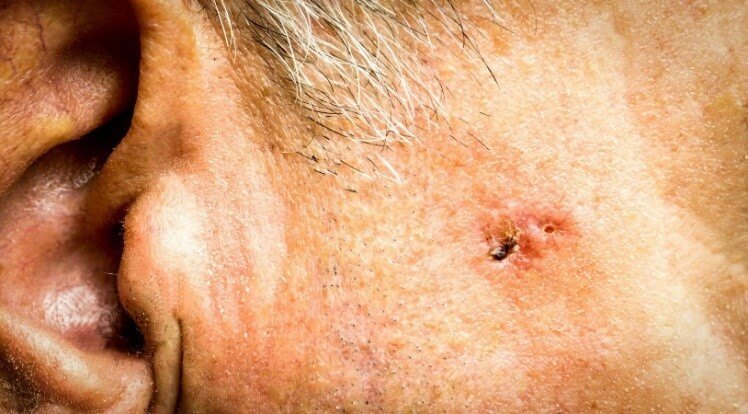
What are the 3 types of skin cancer?
Basal Cell Carcinoma

Basal cell carcinoma (BCC) is the most common form of skin cancer, affecting millions of people in the United States each year. However, it’s very treatable and nearly all patients with BCC are cured.
BCC can manifest on the skin in a variety of shapes and sizes: dome-shaped with visible blood vessels, a shiny pinkish patch, a recurring sore, a brown or black growth, a white or yellow waxy growth with a scar-like appearance.
Basal cell carcinomas typically form on skin with repeated sun exposure such as the neck, scalp and hands. It’s especially common on the face, specifically the cheeks, nose and forehead. Although it doesn’t typically spread, it can develop anywhere on the body and should be treated quickly to prevent destruction of skin tissue and potentially bone.
Although people of all skin colors can get BCC, those with pale, light or freckled skin have a higher risk, as do those with blonde or red hair, blue, green or grey eyes, family history, weakened immune system or those who use tanning beds or devices.
Diagnosis is achieved through a skin biopsy. Based on the results, the dermatologist will determine the best course of action.
Squamous Cell Carcinoma
Squamous cell carcinoma is the second most common form of skin cancer. Like BCC, if it is detected early and treated effectively it is very curable.
SCC can appear as a crusty or rough bump, a red and rough flat patch, a growing dome-shaped bump that may bleed, or a sore that doesn’t heal or heals and recurs.
SCC also typically develops on skin exposed to the sun, particularly the ears, face, lips, back of hands, legs and arms. It can also develop in areas that aren’t exposed to the sun like the genitals and inside the mouth.
Squamous cell carcinoma is more common in Caucasians but can affect all skin colors. Those who use tanning beds have a much higher risk and tend to get SCC earlier in life. There are also a number of physical traits, life experiences and medical history that increase your risk of squamous cell carcinoma.
Physical traits include light colored or pale skin, green, blue or grey eyes, blond or red hair and an inability to tan. Life experiences include spending a lot of time outdoors without protection, exposure to cancer-causing chemicals, smoking tobacco and spending time near heat or fire. Medical history includes actinic keratoses diagnosis, badly burned skin, long lasting ulcer or sore, organ transplant, HPV, multiple PUVA treatments and xeroderma pigmentosum, epidermolysis bullosa or albinism.
As with basal cell carcinoma, a biopsy is used to diagnose SCC. Based on the results the dermatologist will determine the best course of action.
Melanoma
Melanoma is the least common skin cancer, but the most dangerous, as it’s much more likely to spread to other parts of the body. However, if caught early and treated properly it can be cured almost all of the time.
Like the other types, melanomas are typically caused by UV exposure, but heredity can play a role. You are much more likely to have a melanoma if a close blood relative had one. Men over 50 are at a higher risk of developing melanoma compared to the rest of the general public. Melanoma can also affect younger people. In fact, melanoma is the second most common form of cancer in females age 15-29 years old.
Unlike the other types of skin cancer that can take various shapes and forms, melanoma usually appears in an existing mole or looks like a new mole.
If you notice any of the following, you should see your dermatologist as soon as possible:
- A mole that is growing or changing shape or color
- A mole that looks scaly, oozes or bleeds
- A new dark spot that looks like a mole and grows fast
- A new spot that is itchy, painful, or bleeds
- A brown or black streak under toe or fingernail
- A bruise on foot that doesn’t heal
When it comes to melanoma, early detection is critical to positive outcomes, so don’t neglect to get your skin checked annually and schedule an appointment immediately if you notice any of the symptoms above. Your dermatologist will biopsy to confirm diagnosis before determining the best treatment plan for melanoma.
If any of the three types of skin cancer are diagnosed as a result of a biopsy; basal cell carcinoma, squamous cell carcinoma, or melanoma, there are a number of surgical and non-surgical treatment options available.
There are three widely performed major treatment options for the removal of skin cancer. The treatment is dependent on the type of skin cancer, the location on the body, and the severity.
Mohs Surgery
Perhaps the most popular and widely adopted method is Mohs micrographic surgery, typically used for harder to treat areas such as the eyelids or nose where removing a normal looking area of skin might cause issues. With Mohs the doctor does not need to remove additional skin as they can see exactly where the cancer stops.
This surgical method was developed by a physician named Frederic Mohs. The goal of this procedure is to remove all of the "roots" of a skin cancer so that it will not regrow. Of all of the surgical methods used to remove cancerous lesions, Mohs surgery has been the most successful. It can effectively remove basal cell carcinoma, squamous cell carcinoma and has better cure rates than any other procedure.
Unfortunately this revolutionary approach is not practiced by every dermatologist or surgeon. In spite of this procedure's overwhelming success, it is not used as often as it should be because it can be performed only by surgeons who have completed specialized training programs. Metropolitan Dermatology has several highly experienced, fellowship-trained Mohs surgeons on staff throughout our offices in New Jersey.
How does Mohs Surgery Work?
In most cases, Mohs surgery will take no longer than four hours to complete. However, complex procedures can take more time. During the procedure, the surgeon begins by numbing the skin with a local anesthetic. He or she will then remove any visible skin cancer, along with some additional tissue around the tumor for detailed analysis.
After the initial removal, the surgeon will draw a Mohs map, which is a diagram of the surgical site. Tissue from the removal is frozen and examined under a microscope in thin slices. If any cancer remains, the locations of the cancer are marked on the map. Using the map, the surgeon returns to the patient to remove any remaining cancer roots. Because tissue is only removed where cancer is present, the precise layering leaves the smallest wound and scar possible.
Although Mohs surgery leaves the smallest wound possible, the wound may still require surgical repair. In such cases, a second surgery may be performed to repair the wound on the same day, or you may have another procedure on a different day. The location and severity of the wound may also cause the doctor to recommend that the repair be performed by another specialist. In rare cases, the cancer may regrow and additional Mohs micrographic surgery may be deemed necessary.
When melanoma is caught early, excision or Mohs surgery may be the only treatment you need, but when melanoma grows deeper into the skin or spreads, treatment becomes more complex. Additional surgery may be needed. Treatment may also require radiation therapy or chemotherapy to kill cancer cells. Some patients also receive immunotherapy to boost their body’s immune system, which increases the body’s abilities to fight the cancer. If the melanoma is advanced, the patient often receives a combination of these treatments.
IG-SRT (Image Guided Superficial Radiation)
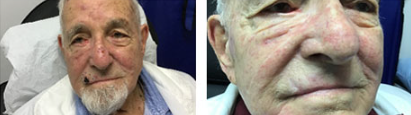
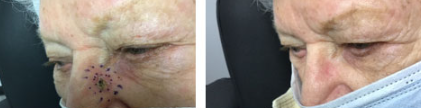
For those who aren’t candidates for surgery or prefer a less invasive option, radiation based treatments may be used. Image-Guided SRT is one of these technologies and it offers superior cure rates and cosmetic results than the others. Treatments are given over a period of weeks and are very effective, without down time or scarring.
Image-Guided Superficial Radiation Therapy is a nonsurgical treatment that uses low levels of X-ray energy to kill cancer cells and allow normal tissue to grow back in its place. For many people dealing with skin cancer, Image-Guided SRT can be a highly effective treatment option without the downtime, side effects, and cosmetic issues sometimes associated with surgery.

How does Image-Guided SRT work?
With IG-SRT, you will sit in a chair and a gel will be applied at the site of the cancer. Using an imaging wand, we can look at a detailed image of the cancer on screen. We will use that image to measure the size and shape of the tumor, calculate the dose of treatment, and define the treatment area. Once complete, the arm of the device will be placed over the treatment site and the exact dose of x-ray energy will be used to precisely target the cancer site without harming the healthy tissue around it. Each treatment session takes about 15 minutes from the time you walk in the door to when you leave the office. You'll come back several times a week for a short treatment session, typically over 6 to 7 weeks. The most recent large-scale study on Image Guided SRT shows a cure rate of greater than 99%, which is equal to or better than the treatment rate experienced with Mohs surgery.
Benefits:
- You’re typically in and out of the dermatologist’s office in 15 minutes or less
- No cutting, no bleeding, no stitches, no surgical scars
- No need for reconstruction surgery
- Quick recovery time
- Reduced risk for infection
- Reduced risk for short- or long-term nerve damage
- No anesthesia usage
- No post-surgery downtime or discomfort
There are several different radiation-based technologies for the treatment of skin cancer. Cure rates and cosmetic outcomes vary based on the technology and protocol. We use only Image-Guided SRT because both the cure rate and cosmetic results are superior to all other radiation-based options. If you’re considering radiation therapy, you’ll want to make sure you’re getting Image-Guided SRT with an adaptive radiotherapy protocol. It’s the gentler way to treat skin cancer.
(Actual patients, Dr. Ilowite, Hillsborough)
Excision & Curettage
Another common method of skin cancer removal is excision, which involves cutting out the skin cancer and an area of normal looking skin around it to remove stray cells. The tissue is then examined under a microscope, especially the normal looking skin to detect any cancer cells. If cancer is found, then additional treatments will be necessary, Mohs surgery being one of the possibilities.
Curettage and electrodessication involves removal of the tissue with a curette (a spoon-shaped instrument with a sharp edge), then electrodessication is used to destroy any remaining cancer cells with heat. This type of surgery is typically only performed when cancer develops on the arm, leg or trunk.
Other potential treatments for BCC and SCC include:
- Freezing: The procedure is called cryotherapy (cry-oh-ther-ah-pee), and it can be performed during an office visit. Cryotherapy involves spraying an extremely cold substance, such as liquid nitrogen, on the BCC to destroy the tumor.
- Light therapy: The medical name for this procedure is photodynamic therapy (PDT). It’s a two-part procedure. First, a solution that makes your skin more sensitive to light is applied to the cancer and a bit of skin around it. You’ll sit with this solution on your skin for one to several hours.Once your skin is ready, it will be treated with a blue or red light to kill the cancerous cells.Light therapy can effectively treat some early BCCs, but you may need repeat treatments.
- Laser treatment: Lasers can be used to remove an SCC that sits on the surface of the skin. This treatment is only recommended for early SCCs.
- Chemotherapy or Immunotherapy cream: When SCC is caught early, a dermatologist may prescribe medicine that you apply to your skin at home to destroy the cancer cells.
- Chemoprevention: If you have a condition that causes you to develop many SCCs, an oral medicine may be prescribed that can reduce the likelihood of developing future SCCs.
If I have BCC or SCC am I at greater risk of developing other types of skin cancer?
Yes. The studies do show that people with one type of skin cancer are more likely to develop another one. As such it’s important to check your skin regularly and protect it as much as possible from UV exposure. If you notice anything out of the ordinary…growths, itching, bleeding, etc. you should make an immediate appointment with the dermatologist.
Are tanning beds a better option than sun exposure?
Contrary to what many believe, you should never use a tanning bed as the UV exposure can cause wrinkling and skin cancer. A better option would be self-tanning products, but keep in mind you still need to wear sunscreen when you use them.
When is Mohs surgery recommended?
Mohs surgery is recommended when a cancer is located on part of the skin, such as the face, that needs to preserve as much healthy tissue as possible. Although any surgery can leave a scar, the skin damage will usually be smaller than those from other forms of skin cancer surgery. Mohs is often the best option if a skin cancer returns following a treatment, or if a cancer is more likely to grow back. When skin cancer regrows, it’s more likely to grow under scar tissue which makes it very difficult to remove. The Mohs procedure allows the surgeon to remove the roots of those deep tumors one layer at a time, promoting more positive outcomes and minimal scarring.
Why is melanoma screening important?
Melanoma is the most serious of the three types of skin cancer as it can metastasize and spread to your organs if not treated quickly. BCC and SCC limit themselves to the skin for the most part. Once melanoma has spread, only 6% of patients will survive 5 years following diagnosis. As such, it’s crucial to undergo a screening if you have any suspicious freckles, moles, other growths or if you have a history of precancerous or cancerous lesions.
How can I reduce my skin cancer risk?
As UV radiation is the primary cause of skin cancer, try to avoid sun exposure whenever possible, especially between 10am and 4pm when the damaging UV is at its strongest. Always use sunscreen if you need to be outside, all year long, and make sure it protects against both UVA and UVB with an SPF of 30 or higher. Wear hats, long sleeves and pants to enhance your protection. Avoid tanning beds and salons. Examine your skin regularly to look for changes and have your skin checked by a dermatologist annually. If you do notice any new growths, bleeding, or moles that are changing in size, shape, or color, make an appointment with your dermatologist as soon as possible.


