
Blepharoplasty (Eyelid Surgery)


It’s well established that as we age, we lose bone mass. And as we lose bone mass in our faces, the skin begins to droop and sag. Nowhere is that more obvious than in the skin around our eyes.
Drooping of the skin around the eyes gives us a tired appearance. It can even affect our peripheral vision, if not treated early. Because we adapt, we find ways to work around this problem. For example, we start using our forehead muscles to raise the eyebrows. Over time, this causes forehead wrinkles to deepen and become permanent. It’s not uncommon for patients to come in for treatment of their forehead wrinkles, when they’re really just compensating for droopy eyelids. So, it's really our job as physicians and facial cosmetic surgeons to identify these problems and offer the most appropriate procedures for what we call periorbital rejuvenation or rejuvenation of the eyes.
One of the cornerstones of periorbital rejuvenation is surgical eyelid tightening, or what we call a blepharoplasty. This is typically a surgical procedure to remove excess skin above and sometimes below the eyes to correct aging appearance. Blepharoplasty can be modified to remove a very thin layer of skin or in some cases skin and fat for those with puffier eyelids. Periorbital rejuvenation can take years off of your appearance. That is because your eyes are really the focal point of your face! It’s where we look when speaking with one another or even to pick up nonverbal cues.
Like all successful surgeries, periorbital rejuvenation begins with a consultation to make sure you are a good candidate for the procedure. Today, we're lucky to have many ways to achieve good results including surgical and some nonsurgical approaches.
How does blepharoplasty work?
A blepharoplasty is an in-office procedure, usually completed in about an hour. After the procedure, patients are often pleasantly surprised at how quickly they recover. The main side effect of surgery is bruising and some swelling that resolves in about 2 weeks’ time. The scar is typically hidden in the natural eyelid crease or just under the eye.

Who is a good candidate for eyelid surgery?
Good candidates for eyelid surgery include:
- Healthy individuals with no medical conditions that can impair healing
- Nonsmokers
- Individuals with a positive outlook and realistic goals
- Individuals without serious eye conditions
Remember that the eyelids are part of the face. The appearance of a drooping upper lid may also be due to relaxation of the forehead skin and eyebrow. Sometimes stretching out of the upper eyelid muscle may cause a drooping eyelid. This is called eyelid ptosis and requires a different surgical treatment.
Your surgeon will evaluate your facial anatomy thoroughly and will determine if upper and/or lower eyelid surgery might best remedy your concerns. Like all successful surgeries, periorbital rejuvenation begins with a consultation to make sure you're a good candidate for the procedure. Today, we're lucky to have many ways to achieve good results including surgical and some nonsurgical approaches.
Call today to schedule your consultation with Dr. Paul Presti!
Schedule an Appointment Today!
We are happy to assist you!
(Cosmetic treatments & services vary by location/provider )
Now Accepting New Patients
What's involved with eyelid surgery?
The incision lines for eyelid surgery are designed so the resultant scars will be well concealed within the natural structures of the eyelid region. The upper eyelid can be corrected through an incision within the natural crease on the eyelid. This allows for removal or repositioning of fat deposits, tightening of muscles and removal of excess skin.

Conditions of the lower eyelid may be corrected with an incision just below the lower lash line. Through this incision, excess skin in the lower eyelid is removed. Again, the excess fat can be repositioned or removed. A transconjunctival incision, created on the inside of the lower eyelid, is an alternate technique to correct lower eyelid conditions and redistribute or remove excess fat. With this technique, no skin is removed.

Eyelid incisions typically are closed with sutures or skin glue. Sutures are removed within one week. Your surgeon may also suggest using a laser or chemical peel to reduce discoloration of the lower eyelids.
How long do results last?
The benefits of eyelid rejuvenation are long lasting. Results are typically seen for up to 10 years after blepharoplasty and surgical brow lifts.
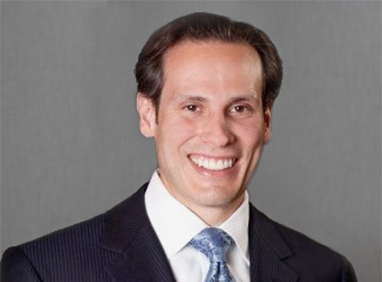
About Dr. Paul Presti
- Dual Board-Certified Facial Plastic and Reconstructive Surgeon, Head and Neck Surgeon
- Fellowship trained in Facial Plastic & Reconstructive Surgery
- Awarded Castle Connolly Top Doc from 2014 to present and NJ Top Doctor from 2011 to present
- Blepharoplasty is a cosmetic procedure, not covered by insurance. Dr. Presti is available for consultations at our Kenilworth location.


